
News
Stakeholders Seek Youth Inclusion in Education Reforms, Demand Rural-Urban Equity

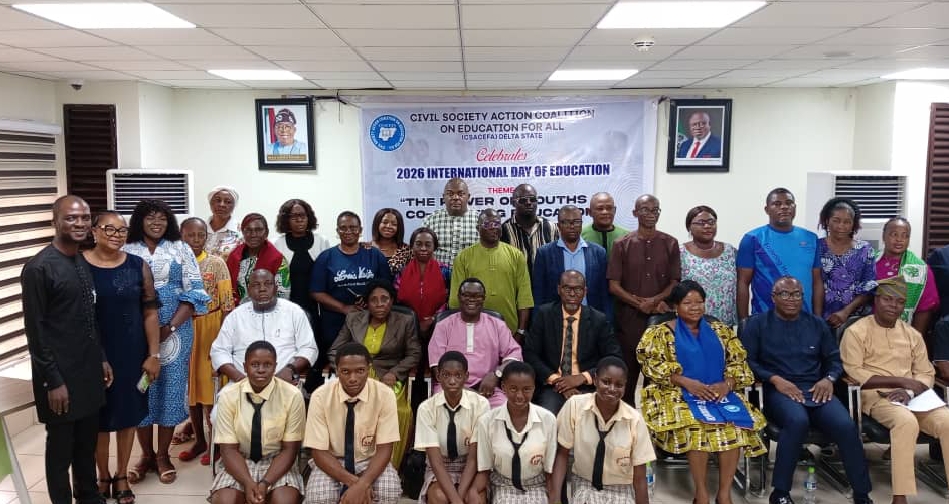
Education stakeholders have called for far-reaching reforms that will place young people at the centre of policy formulation and curriculum development in Nigeria. The call was made during a one-day sensitization workshop organised by the Civil Society Action Coalition on Education for All (CSACEFA) to mark the International Day of Education in Asaba.
In a communiqué issued at the end of the workshop, participants expressed concern over the widening disparity between rural and urban schools, particularly in curriculum delivery and access to quality learning resources. They urged authorities to adopt deliberate strategies to bridge the gap and guarantee equal learning opportunities for students irrespective of location.
Stakeholders stressed that sustainable education reform requires the active involvement of young people in shaping systems that affect them. They advocated the integration of youths into curriculum design and decision-making processes to promote innovation, relevance and engagement, describing co-creation as a collaborative partnership among learners, teachers and other actors in the education ecosystem.
The forum also highlighted the need to move from passive teaching methods to participatory learning approaches that encourage students’ contributions and creativity.
Participants noted that collaborative frameworks that support innovation and shared problem-solving are essential for preparing young people for contemporary challenges.
In her address, CSACEFA Delta State Coordinator, Juliana Nzemeka, said the commemoration formed part of a global observance led by the United Nations and UNESCO, reaffirming education as a fundamental human right. While acknowledging progress in Delta State and Nigeria, she identified persistent challenges such as rising out-of-school figures, inadequate infrastructure, teacher shortages and weak policy implementation, calling for collective action by government, civil society, communities and the private sector.
Nzemeka reaffirmed the coalition’s commitment to advocating increased education funding, inclusive learning for children with disabilities, improved school environments and stronger accountability mechanisms to ensure policies translate into measurable impact.
Delivering a goodwill message, Deacon Matthew Ikechukwu described the gathering as a convergence of shared responsibility toward advancing quality education, commending SACEFA for sustaining advocacy platforms that continue to illuminate pathways to equitable learning for all