
News
2027 Elections: Prof. Okaba Unveils ‘Charter of Demand’

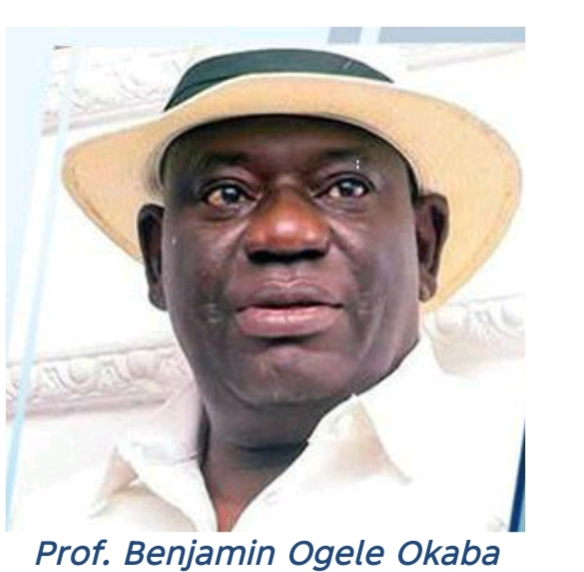
… Says Niger Delta Will No Longer Be Nigeria’s Economic Goose without Political Justice
By Nnadi Chukwubuzo
PORT HARCOURT_ As political alignments, strategic defections, and permutations for the 2027 general elections gather momentum across Nigeria, the Niger Delta region has declared that its political support will no longer be cheap, unconditional, or traded for empty promises.
Speaking as a featured guest on Signature Morning, the immediate past President of the Ijaw National Congress (INC) and Chairman of the Conference of President-Generals of Niger Delta Ethnic Nationalities, Professor Benjamin Ogele Okaba, in his heavy-hitting, scholarly, yet urgent tone typical of Professor Benjamin Okaba’s structural advocacy for the Niger Delta, laid bare the region’s collective stance.
He formally unveiled what he termed the: Charter of Demand of the Niger Delta to all Political Parties’ 2027 Presidential Candidates.
Professor Okaba warned that the region—which remains the economic backbone of the Nigerian federation—will strictly negotiate its electoral capital based on structural, environmental, and economic deliverables rather than political tokenism.
“We the people of Niger Delta, produce the wealth that sustains Nigeria’s economy. For over 60+ years, this has come with environmental devastation, underdevelopment, and political marginalization”, he lamented.
“For decades, the Niger Delta has been the goose that lays the golden egg, only to be systematically sacrificed at every fiscal cycle,” Okaba stated during the broadcast. “As the 2027 political buildups begin, we are making it categorically clear to all political parties and their prospective presidential flag bearers: the Niger Delta is coming to the negotiation table with a clear, uncompromisable Charter of Demand anchored on equity, justice, and survival.”
The Core Pillars of the Niger Delta 2027 Charter of Demand
Professor Okaba broken down the region’s non-negotiable agenda into five critical benchmarks that any presidential candidate seeking the region’s multi-million block votes must commit to executing:
Resource Ownership and Revenue
According to Professor Okaba, the Niger Delta people are demanding co-ownership of oil and gas assets in Nigeria through equity participation of not less than 15% for host states and communities in all renewed oil and gas divested assets, constitutional amendment to raise derivation from 13% to 25% by 2028, and binding timeline to relocate operational headquarters of all NNPCL subsidiaries to Niger Delta States.
2. Devolution of Power and True Federalism
The current highly centralized political structure of Nigeria is untenable, faulty, and unsustainable. The Charter demands a fundamental restructuring of the Nigerian polity, returning the country to a true federation where states or regions act as autonomous federating units with the power to legislate, grow, and secure their territories without overbearing interference from the center. “We demand political inclusion and respect, fair representation and political stability in Niger Delta States through power rotation. We demand that there must be appointments of Niger Delta indigenes into key roles key MDAs like Petroleum, Finance, NUPRC, NNPCL, NDDC, and introduction of dialogue mechanism where there should be quarterly presidential-level engagement with PANDEF and traditional rulers.
3. Resource Democracy and Fiscal Devolution
Niger Delta demands an end to what Prof. Okaba described as the “juridical architecture of expropriation”—a legal trajectory from the 1969 Petroleum Decree to the 2021 Petroleum Industry Act (PIA) that dispossesses indigenous communities of their natural wealth. The region demands absolute ownership rights to their lands, waterways, and mineral endowments, operating under a system of true fiscal federalism where regions pay taxes to the center rather than begging for allocations. Furthermore, the 3% host community allocation in the PIA is rejected as an insult to the people bearing the brunt of oil extraction.
4. An End to ‘Ecological Genocide’ and Immediate Remediation
Decades of oil exploitation have resulted in aquatic toxification, severe gas flaring, and widespread environmental despoliation, which Okaba termed an ongoing “ecological genocide” where thousands of infants die from polluted waters while multinational corporations enjoy state-backed impunity. The Charter demands immediate, comprehensive environmental remediation, a total cleanup of the entire region, and strict legal accountability for corporate polluters.
5. Establishment of the South-South Development Commission (SSDC)
While supporting regional intervention agencies, the Charter demands that the National Assembly immediately pass the South-South Development Commission Bill. Professor Okaba noted that the current Niger Delta Development Commission (NDDC) has been structurally compromised as a pan-Nigerian agency containing non-South-South states (some of which benefit from multiple regional commissions), leaving the actual core South-South geopolitical zone marginalized. He reiterated that Niger Delta people are also requesting for institutional reform and accountability to make NDDC and Niger Delta Ministry deliver. This he said can be done by establishing a tenure security initiative of 5-year, non-renewable terms for NDDC board and MD, tied to KPIs, establishment of project portals with public real-time dashboard access of all NDDC/NDM projects, budgets, and completion status, and commencement of independent annual forensic audit of NDDC, published within 90 days of year-end.
6. Socio-Economic Equity and Security Inclusion
Despite producing over 75% of Nigeria’s historical wealth, the Niger Delta remains plagued by mass poverty, systemic youth unemployment, and infrastructural decay. The Charter demands targeted economic investment, total infrastructure transformation, an end to the selective deployment of non-indigenous security heads to suppress local populations, and equal representation/headship for Niger Deltans within the nation’s military and security architectures.
7. Environmental Justice
On the issue of environmental justice, Professor Okaba said the Niger Delta region demands clean up of the land to stop further damage by immediate actionable moves to establish a federally managed, independently audited Niger Delta Environmental Remediation Fund. Immediate completion of Ogoni cleanup project, and same process extended to all polluted communities by 2030. Enforcement of zero routine on gas flaring by 2027 with criminal penalties for violations, and codification Polluter liability for spills caused by third parties into law, with compensation paid upfront pending litigation.
8. Security and Peace
“We demand to secure the Niger Delta region without criminalizing it through surveillance reform and restructuring of pipeline protection contracts for transparency, broader community inclusion, and performance audits, converting Presidential Amnesty Programme into a skills-to-jobs pipeline tied to gas, marine, and agro-industry projects, and institutionalization of community-based security frameworks in partnership with state governments.
9. Infrastructure and Economic Diversification
According to Professor Okaba, Niger Delta economy can be built beyond oil. He stressed the need of the region to be opened up through rapid completion of flagship projects like: Bonny-Bodo Road, East-West Road, Ibaka Deep Sea Port, and Angiama-Oporoma Bridge within first 24 months, making Gas industrialization final investment decision and local content quotas for Brass LNG, modular refineries, and gas processing hubs and facilitating Niger Delta Agro-Industrial Fund by earmarking N200bn fund for fisheries, agriculture, and MSMEs, managed with state governments.
10. Implementation and Accountability
Professor Okaba expressed his utter disappointment with the abysmal ways government establishments and other agencies have handled agreements entered with Niger Delta people in the past. He said that his people are calling for all agreements signed as MOUs with government agencies and contractors to be strictly on timelines, benchmarks, and that penalties should be stated for non-compliance. Establish He called on the authorities to Independent Niger Delta Development Monitoring Council with civil society, traditional, and youth representations, and Public reporting on quarterly basis to the National Assembly and the public.
Our Harmonized Position: No Niger Delta Interest! No Votes!
Professor Okaba reminded political actors that the region’s ethnic nationalities—including the Ijaw National Congress (INC), the Movement for the Survival of the Ogoni People (MOSOP), the Itsekiri Leaders of Thought, the Urhobo Progress Union (UPU), and others—have fully harmonized their positions. He concluded by stressing that the time for vague promises is over. Any candidate who refuses to sign onto this socio-ecological blueprint will be rejected at the polls by the collective will of the Niger Delta people. “We are entering 2027 with our eyes open. If you want our votes, you must respect our right to self-determination, protect our ecosystem, and guarantee our resource democracy. We will no longer remain second-class citizens on the very land that feeds this nation.”We are not seeking charity. We are negotiating the terms under which Nigeria accesses our resources. No candidate gets a blank cheque in 2027”, he reiterated.
Finally, Professor Ben Okaba said that it is very imperative for all Niger Deltans to be coordinated in this push for a better Niger Delta come 2027. He urged for the coordination of all major political actors in the region to key into this initiative and defends these core demands and expectations as a United Niger Delta House, adding that continuous pursuit of individual personal agenda and gains will do the region no good. “United we stand, divided we fall”, he concluded.